Methodology
Scope: This database includes investments from 28 development finance institutions that publicly disclosed at least one investment in the hotel industry. The data published here cover357 DFI hotel projects, which together represent nearly $6 billion USD in equity and debt investments. The scope of this database is limited by the disclosure practices of DFIs, some of which do not publish project-level information.
Sources: This data comes from disclosures and statements made directly by DFIs. Additional information was gathered as necessary from corporate documents, press statements and the publications of hotel industry organizations ..
Geography: Projects’ location is listed by city, country, and continent. Projects are also organized by intermediate regional and sub-regional categories pursuant to the geographic scheme maintained by the United Nations Statistics Division.
Equity Investments: The term equity investments, as used in the database, refers to DFI investments with any equity component. This includes direct equity investments, in which the DFI is a shareholder, intermediated equity investments, in which the DFI funds a shareholder, and quasi-equity investments, in which DFIs receive an interest that may be converted into a shareholder interest.
Investment Values: All values are provided in USD. If an investment in a project is disclosed in a currency other than USD, the investment amount was converted to USD based on the exchange rate on the first day of the year the project was approved. Where the total project cost is unknown, the disclosed value of the DFI investment is used as a minimum value.
Updates: The dataset is updated quarterly on January 1, April 1, July 1 and September 1.
Summary of Findings
In total, 28 global, regional, and bilateral development finance institutions (DFIs) have disclosed investments in projects related to the hotel sector. The aggregate value of these investments is slightly more than USD 6.5 billion equivalent.
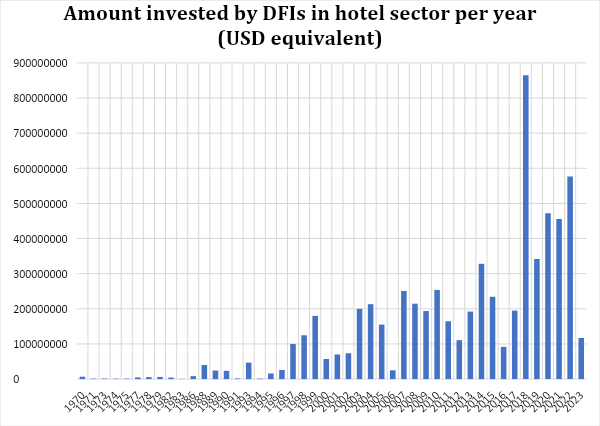
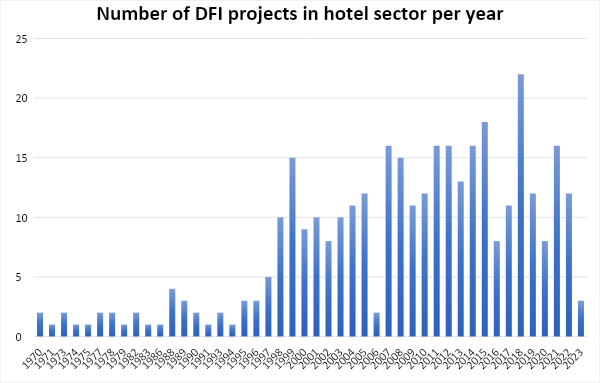
The amount of development finance invested in the hotel sector shows regular growth since its inception in the 70s, with some occasional variations. In the past 5 years, DFIs have invested more than USD 500 million per year on average in the hotel sector. In 2004, DFIs regularly invested in more than 10 hotel projects each year. By 2012, that rate reached 15 projects per year.
In 2018, both the number of hotel projects and the amount disbursed reached a peak of nearly USD 9 billion. This was followed by a general slowdown in the sector, partly linked to the COVID-19 pandemic. Since the 2021, however, DFIs have not shied away from investing in hotel projects, including expansion and new construction, demonstrating long-term trust in the sector’s performance.
"Status" of Hotel Projects
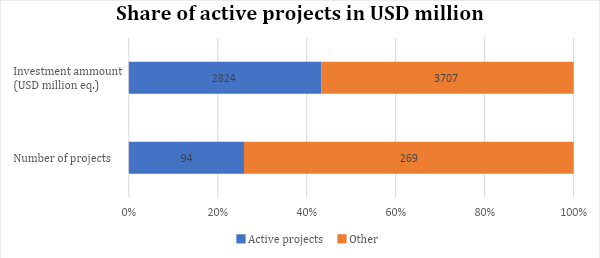
DFI investments in hotel projects are considered active from the moment the board approves the project to the moment either the totality of the investment is repaid or the investment has been exited. DFI disclosure shows that at least 25% of hotel projects are currently active. Due to the inflation in project cost, these projects represent more than 40% of committed USD in the hotel sector.
Largest DFI Investors in the Hotel Sector
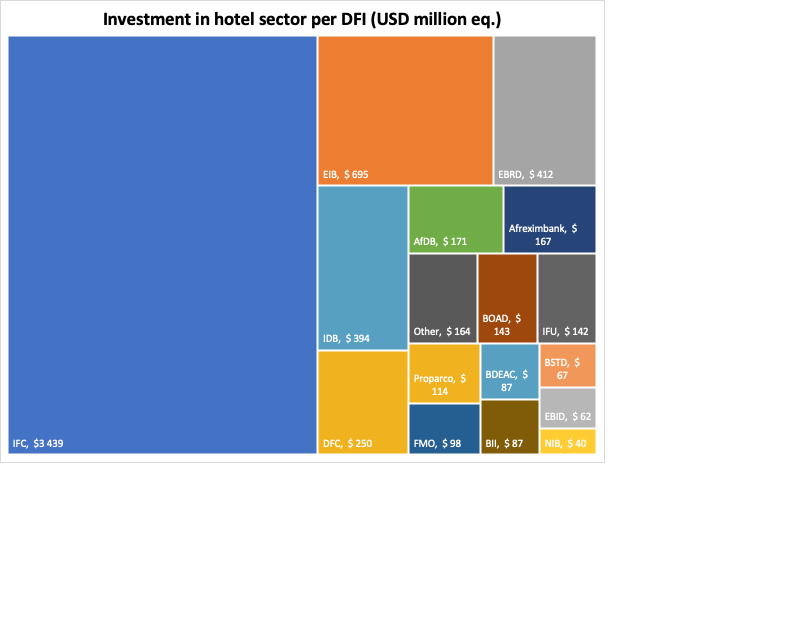
The IFC, historically the largest DFI in the world, accounts for more than half of DFI investments in the hotel sector. It is followed by large regional institutions: both European DFIs, the European Investment Bank (EIB) and the European Reconstruction and Development Bank (EBRD), as well as the Inter-American Development Bank (IDB).
The next largest contributors to the private hotel industry are bilateral institutions from the United States, the Netherlands, France, Denmark, and the United Kingdom.
Hotel Investment by Sub-region
The United Nations’ statistical scheme divides the world into comparable and coherent sub-regions (see map below). This system can be used to compare the amounts invested in the hotel sector geographically.
The largest recipient of hotel project investments is the Western Africa sub-region. This is mostly due to consistent and spread-out investments throughout countries in which political stability and economic growth have been the recent norm. The risks caused by potential instability have led investors to seek investment guarantees in conjunction with development finance, notably from the Multilateral Investment Guarantee Agency (MIGA), one of IFC’s sister agencies.
Southern Asia is the second largest recipient of hotel development finance, due to large investments in Sri Lanka and Myanmar, as well as the development of resorts and a burst in tourism in the Maldives.
Southern Europe is an important recipient of development finance in the hotel sector. These investments are distributed evenly with a clear recent pull towards Croatia and the Adriatic Sea.
Central America is the next largest target of DFI investments. As in West Africa and Southern Europe, the number of investments are spread throughout the sub-region, with Mexico receiving the most funding in terms of the gross USD equivalent invested. Southeastern Asia is the 5th largest sub-region in terms of investment recipients as a result of mega projects worth more than USD 100,000 each in Thailand, Indonesia, and Vietnam.
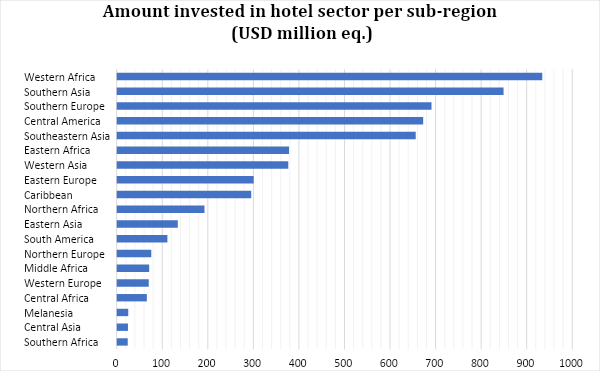
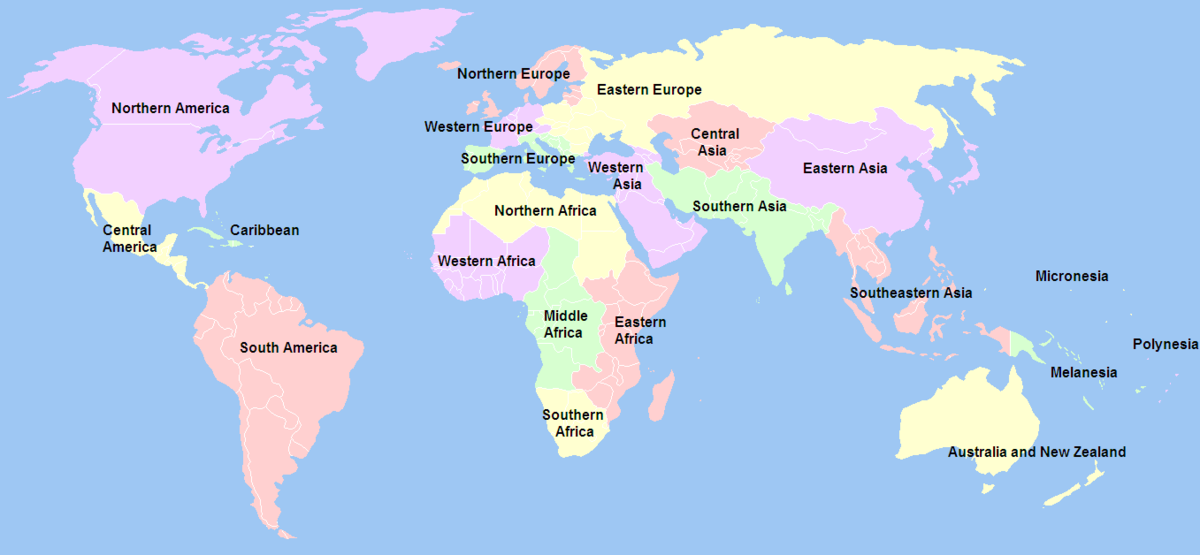
 Figure 1- UN geoscheme
Hotel Investment by Country
In terms of the number of dollars invested, Mexico is by far the largest recipient of hotel development finance. This reflects the large loans proposed or made to Mexican hotel companies such as Xcaret, Posadas, and City Express, as well as Spanish and international hotel groups operating within Mexico. There is a concentration of large recipients in southern/southeastern Asia, as noted in the sub-regions analysis. In sub-Saharan Africa, the largest recipients are Ghana and Senegal.
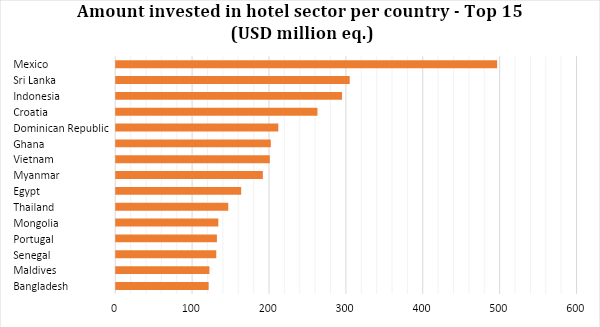
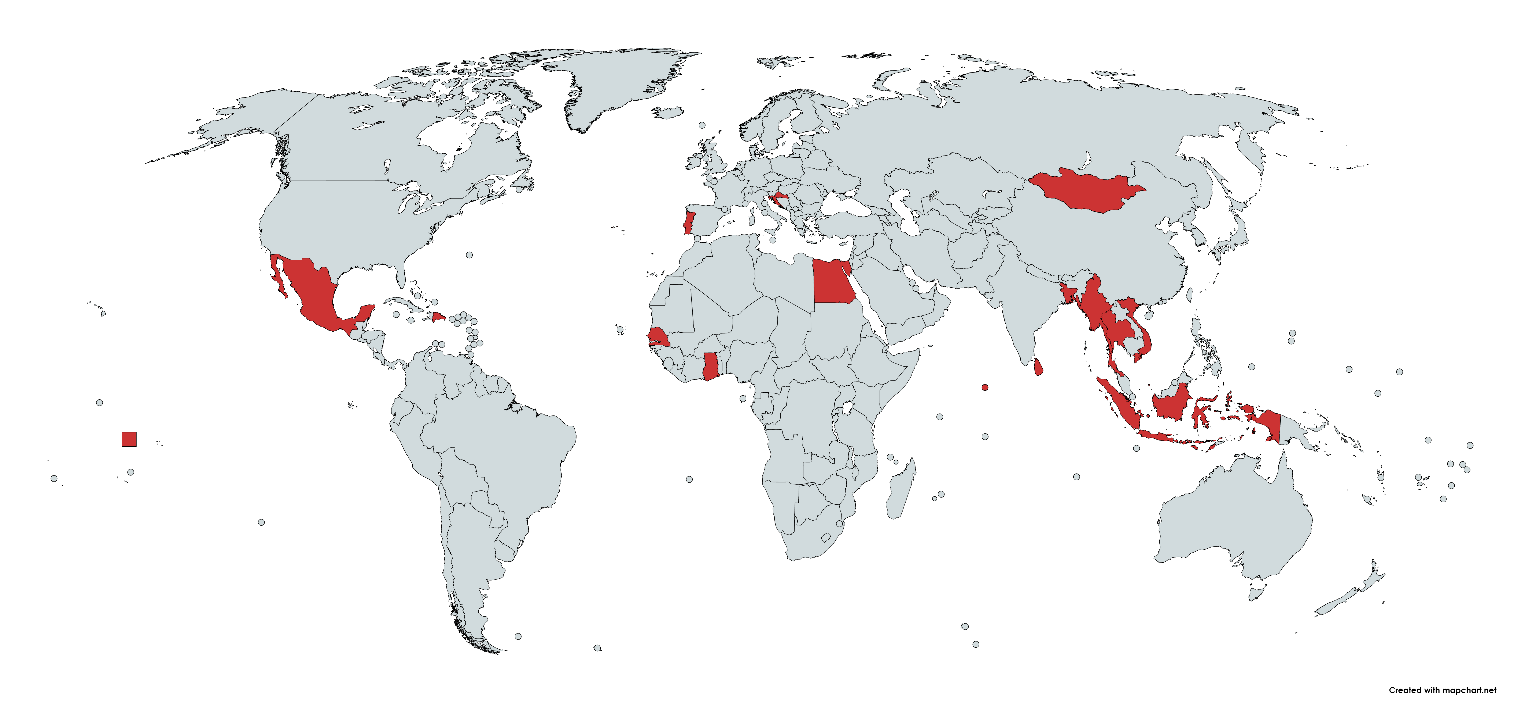 Figure 2 - Top 15 recipient countries of DFI investment into the hotel sector
Hotel Groups
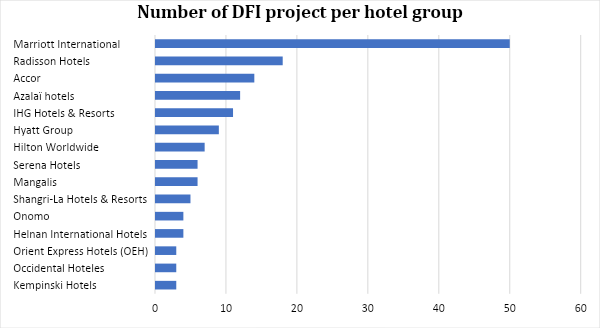
Out of the 357 hotel investment projects, we have identified the hotel group or brand for 273 of them. We show all hotel groups that account for 4 distinct investments or more.
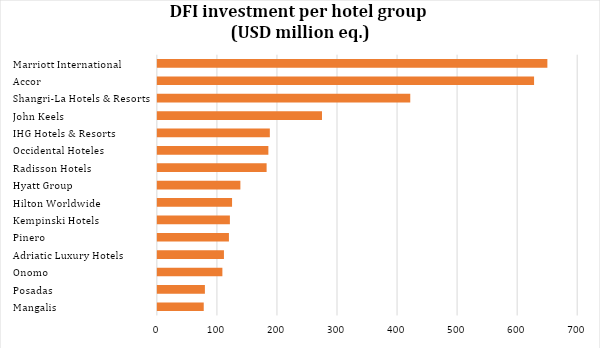
Projects that are exclusively branded under Marriott International account for 50 development finance projects, and Marriott covers more than 14% of all DFI funded hotel projects. This translates into more than USD 700 million of debt loans and/or equity.
The second largest recipient of development finance is Radisson Hotels, which is involved in 18 different projects. In financial terms, however, this only accounts for USD 183 million, behind many other groups with fewer but larger projects. Accor is the third largest with 13 projects, accounting for a staggering USD 611 million, just behind Marriott.
Investment Type
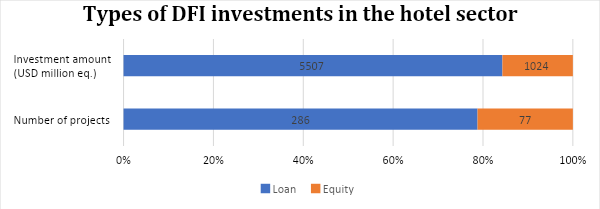
DFIs use a variety of financial tools to fund private sector projects. These investment types fall into two main categories: loans and equity. Loans are direct debt instruments that are then repaid over a certain amount of time by the debtor to the DFI. Equity investments can take a few different shapes. Some DFIs can take direct equity in a company and become a shareholder. The institutions can also use intermediate equity, along the “fund of fund” model, which means the DFI invests in a fund that then acquires equity with a company. Finally, DFIs can make quasi-equity investments. These investments are structured as debt but share similar attributes to equity in terms of return, and can often be converted into actual equity.
Investments with an equity component represent more than 20% of projects and more than 15% of USD invested in the hotel sector. The IFC, the BII, and the IFU together account for almost all equity investments and projects.
Largest Investments in the Last 5 Years
Trans Corpora:
In 2018, the IFC made a USD 250 million investment to finance Trans Corpora in Indonesia. This subsidiary of the CT group conglomerate used the funds to expand its tourism operations. The group has an agreement with Accor to develop 30 new hotels, adding 6000 rooms.
JKH Services:
In 2020, the IFC made a USD 175 million investment in the JKH conglomerate in Sri Lanka. The company has a hotel and hospitality subsidiary. The funds are meant to be used to refurbish the company’s hotels in Sri Lanka and Maldives adding a total of 174 rooms to 3 hotels.
Kasada:
In 2022, the IFC committed USD 160 million to Kasada in Africa for its general development and hotel acquisition strategy. Kasada, backed by Accor and Qatar, planned to acquire 8 brownfield hotels in Côte d’Ivoire, Senegal, and Cameroon for its first development phase named “Ayaba”. This project is in collaboration with Proparco, the French bilateral DFI.
Shangri-La:
In 2022, the IFC made a USD 145 million loan to Shangri-La in the Asia/Pacific region. The loan is to support the company’s operations, notably, concerning 6 hotels previously funded by development finance. The company owns hotels in Fiji, Mongolia, Maldives, and Sri Lanka.
AWC:
In 2020, the IFC made a USD 137 million loan to AWC, a large Thai hotel company. The loan is to refurbish 3 prestigious hotels, build 2 new hotels (1000+ rooms), and reopen AWC hotels that shut down during Covid-19.
Piñero:
In 2021, the IDB made a USD 120 million loan to Piñero in the Caribbean and Central American region. The loan is to finance the company’s working capital needs. Piñero operates 27 hotels in the Dominican Republic, Jamaica, Mexico, and Spain.


